Example setup · Software delivery
How five agents can ship one software release together
Five agents handled code, tests, previews, and deployment while one person stayed in control.
Why this gets messy
A release has lots of moving parts. The frontend can be ready while the API is still changing. Tests can pass locally and fail on the preview server.
Five agents can do the work, but five separate chats leave the human copying updates between them and guessing what is blocked.
Put the whole job in one place
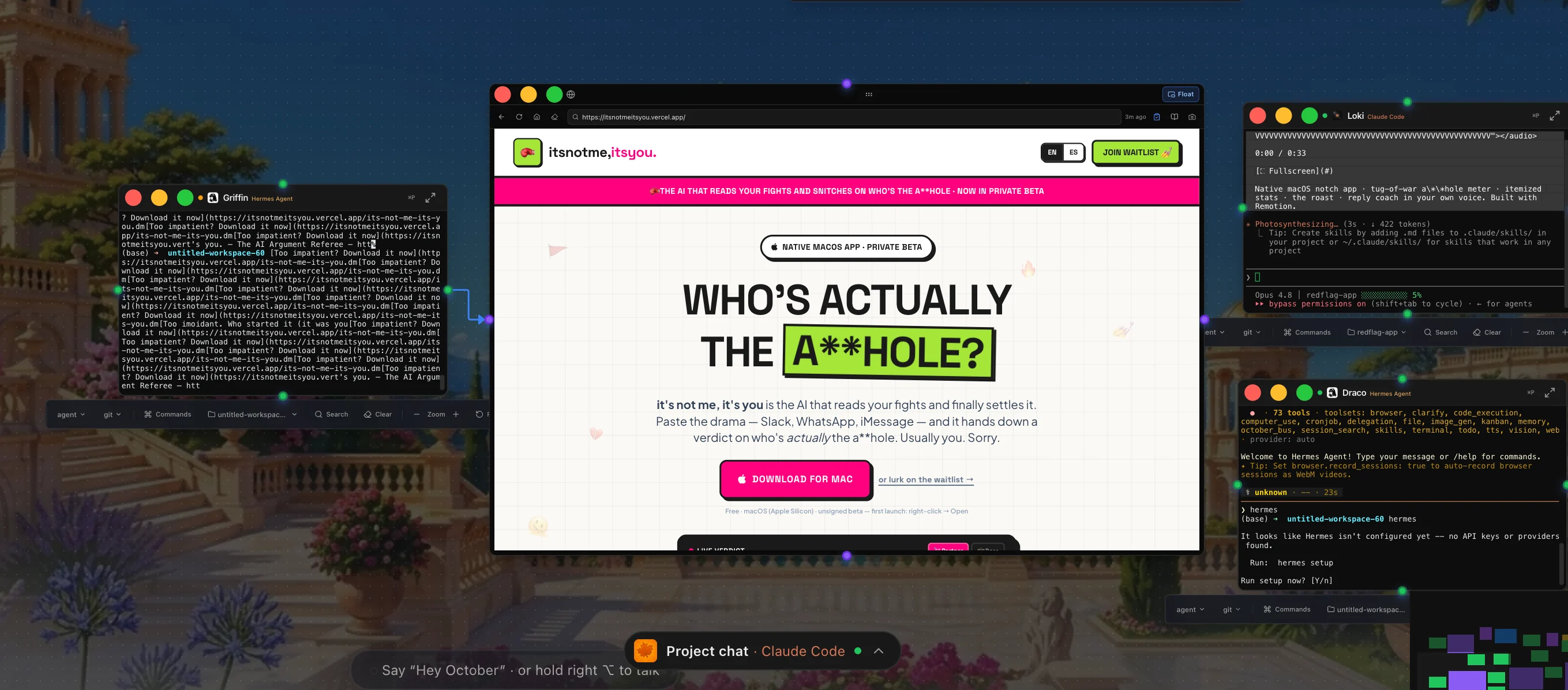
October put the whole release on one canvas. Each agent kept its own repo, worktree, and tools. Tasks, blockers, messages, and the live preview stayed together.
Give each agent one clear job
Frontend
Codex · Frontend worktree. Built the interface and checked the live preview.
Backend
Claude Code · Backend repository. Updated the API and told the other agents when its contract changed.
Verification
Cursor · Test worktree. Ran focused and integration tests across both changes.
Release
Goose · Remote Linux server. Built the preview and prepared the release checklist.
Keep every handoff visible
Set the release scope
Person running it. The operator wrote down what was shipping, what needed review, and who could approve production.
Split the work
Frontend and backend agents. Agents claimed separate tasks and worked in isolated repos or worktrees. Everyone could see the blockers.
Share changes early
Agents. The backend agent sent API changes straight to the frontend and test agents while they were still working.
Preview, test, ship
Release agent and human. The release agent built a preview and showed the test results. The human checked both before production.
You still make the important calls
Each agent only saw the repo, app, and peers it needed.
Separate worktrees stopped agents from overwriting each other.
A human still approved production.
What changed
The operator could see the whole release without opening five chats. Every task had an owner, every blocker had a status, and the preview sat beside the work.
The agents kept their own tools. October simply gave them one place to coordinate.