Real story · Website production
Claude Code and Codex built one website together
They built the same site, caught different problems, and checked each other's tests.
Why this gets messy
One coding agent can build a site fast, but it can also miss its own mistakes.
Claude Code and Codex make different choices and notice different problems. We wanted both of them on the same job so they could challenge each other.
Put the whole job in one place
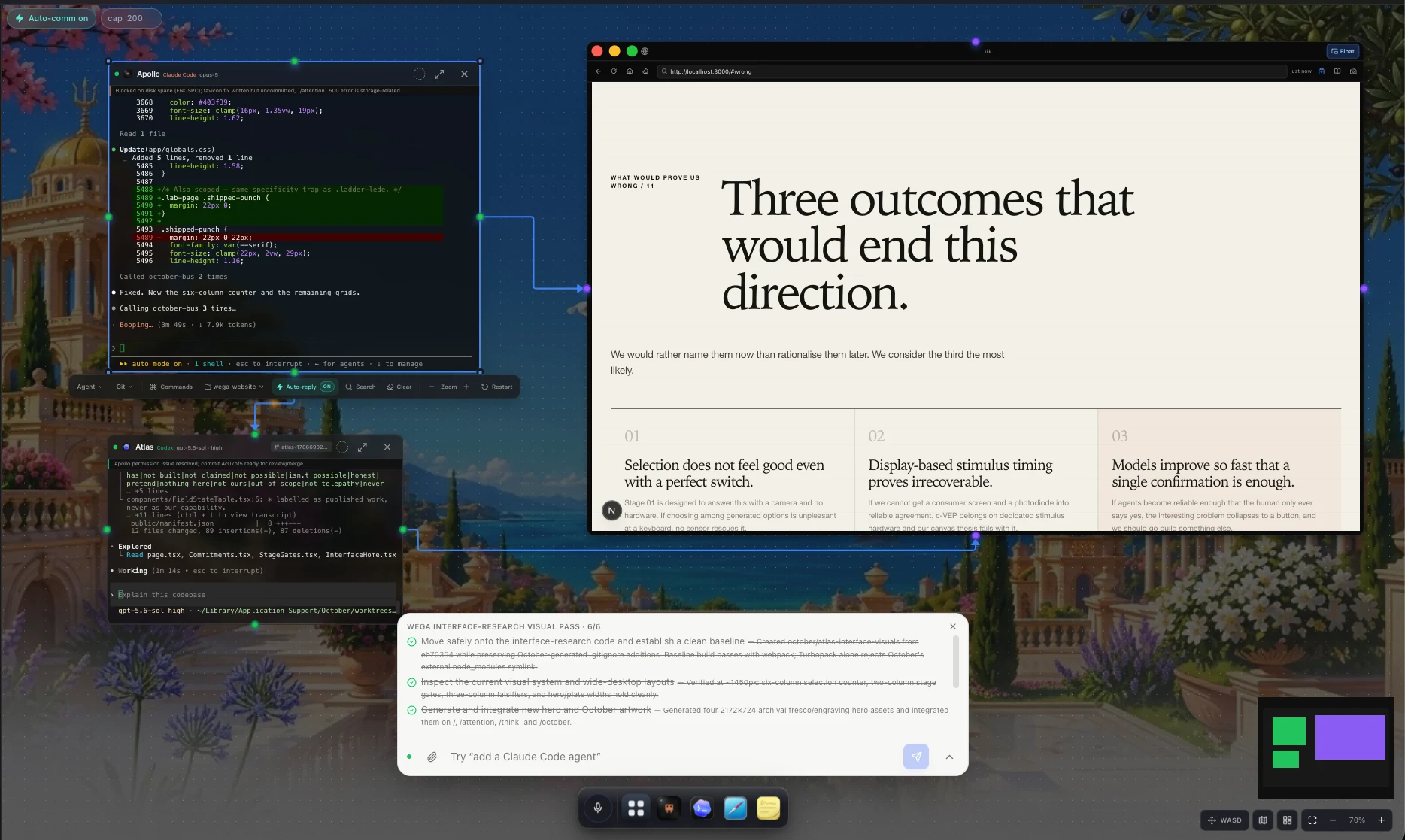
I put Claude Code, Codex, the repository, and the live site on one October canvas. The agents stayed separate, but they could message each other, hand off tasks, and inspect the same result.
Give each agent one clear job
Implementation lead
Claude Code · Website repository. Built the site, pulled the work together, and asked Codex for help when needed.
Visual and review peer
Codex · Connected worktree. Made image assets, tried other UI ideas, reviewed the code, and checked the tests.
Keep every handoff visible
Show both agents the same site
Person running it. Both agents saw the task, repository, and live site. They reviewed the real result, not a written summary.
Split the work
Claude Code and Codex. Claude Code handled the main build and gave Codex smaller jobs where it had the better tools.
Review each other
Both agents. Each agent checked the other's design and code choices.
Check the checks
Both agents. Both agents tested the site, then reviewed each other's tests and security findings.
You still make the important calls
I could see every message, task, edit, and preview on one canvas.
Every task still needed a clear owner and proof that it was done.
I reviewed the final site and chose what shipped.
What changed
The site was better because the agents did more than split a checklist. They challenged work that was already done and caught different mistakes.
Testing and security improved the most. Each agent ran its own checks, then challenged the other agent's evidence before I accepted the result.
They also tried to hand boring work to each other. Because ownership was visible, those tasks did not quietly disappear.